


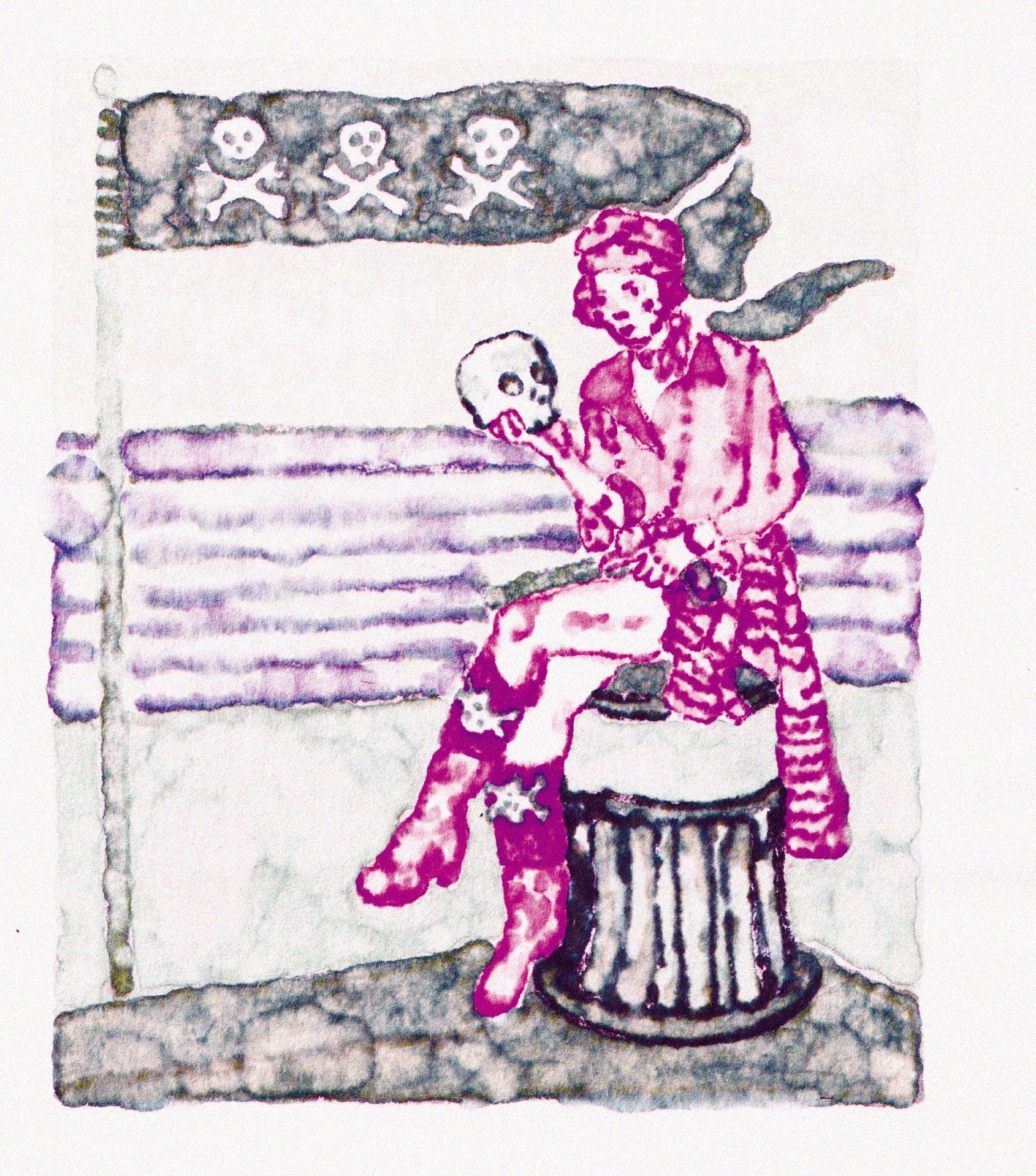
Illustrazione di Beatrice Ottaviani
What happens when the theatrical apparatus is hijacked by a galleon? Can dramaturgical practice embrace salt water as the political space of a radical democracy? How, and through what kinds of movements?
aka Jolly Roger is a writing project for live performance, oriented both inside and outside the Jolly Roger — the pirate flag, a transnational, transcultural, extra-territorial symbol under which communities fighting for freedom, or rather liberation, recognize themselves. Beneath the shadow of a flag bearing a dancing skull, the text questions what must be said before carrying out a revolutionary action, and what conditions of possibility and thought must be injected into political struggles.
In an attempt — and out of a desire — to dismantle land-centric politics that compel belonging to a territory and a continual “grounding” (one need only think of the entirely terrestrial lexicon through which language has circumscribed our way of conceptualizing and representing the world — well-grounded, background, field of research), the dramaturgy experiments with a form of pre-writing: mobile and transversal, entirely entrusted to a pirate crew who, through their multilingual voices and bodies, continually define and redefine the world outside the theatre.
A writing passed from hand to hand as a warning signal of intersectional struggles, through which new borders, jurisprudences, imperatives, and alternative perspectives might be drawn — moving not through hierarchy but through contemporary stumbling, beginning with the Ventotene Manifesto and its stratagem: a roast chicken. Ideas about lands also spread this way, travelling with a chicken as the vehicle for what cannot be spoken — as a character holding together the threads and ropes of discourses that, through homonymy, intertwine with Polly, the 1729 ballad written by John Gay and the only known reference work whose protagonist is a woman pirate.
Navigating seas and islands beneath a flag that fails to perform its function of outlawing — and therefore never delimits, but continuously changes shape — the dramaturgy thus experiments with a clandestine layout that presses and waits to move beyond the page and encounter all those bodies which, in disobedience, inhabit the scenic space (only the scenic space?).
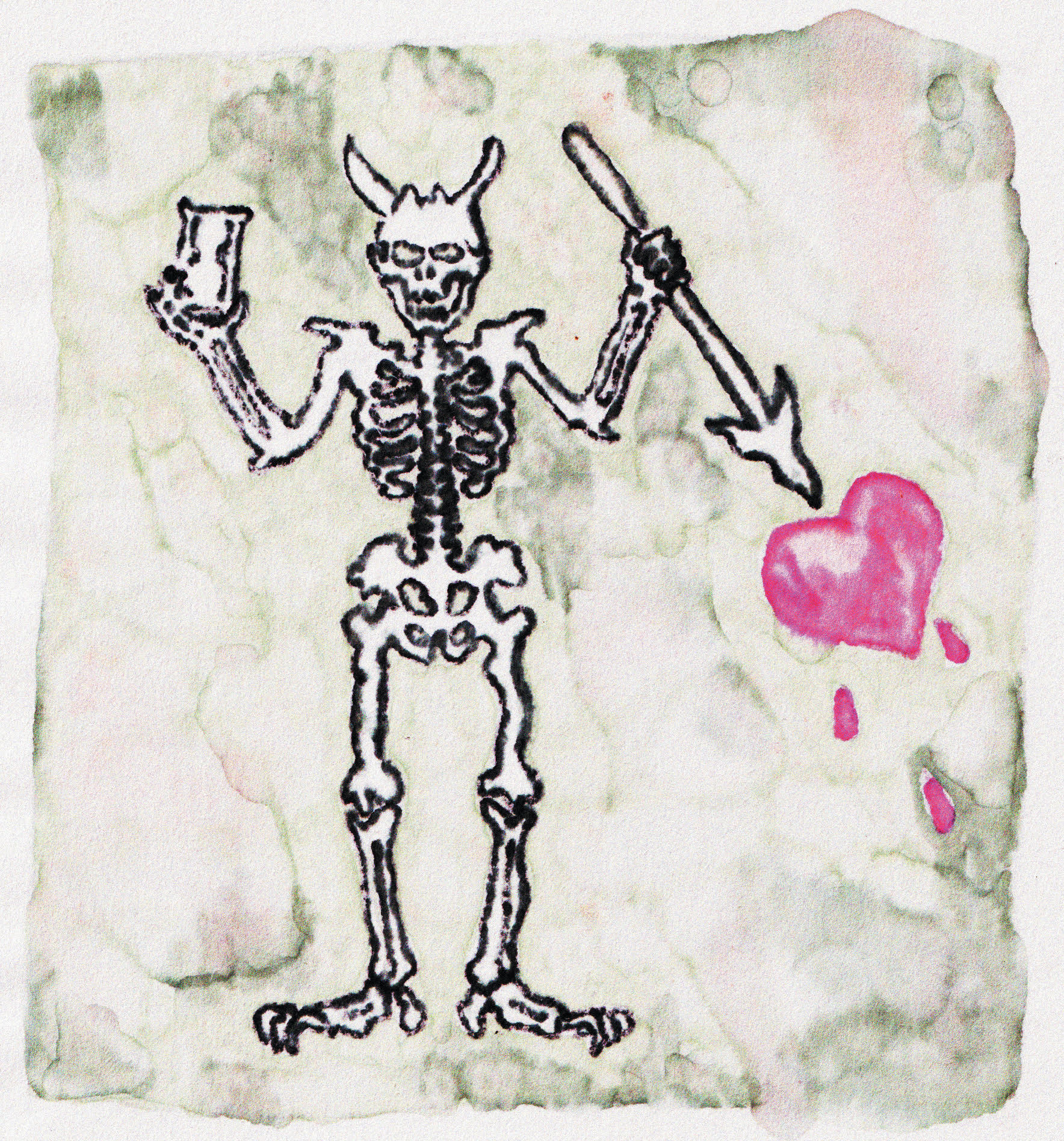
Illustrazione di Beatrice Ottaviani

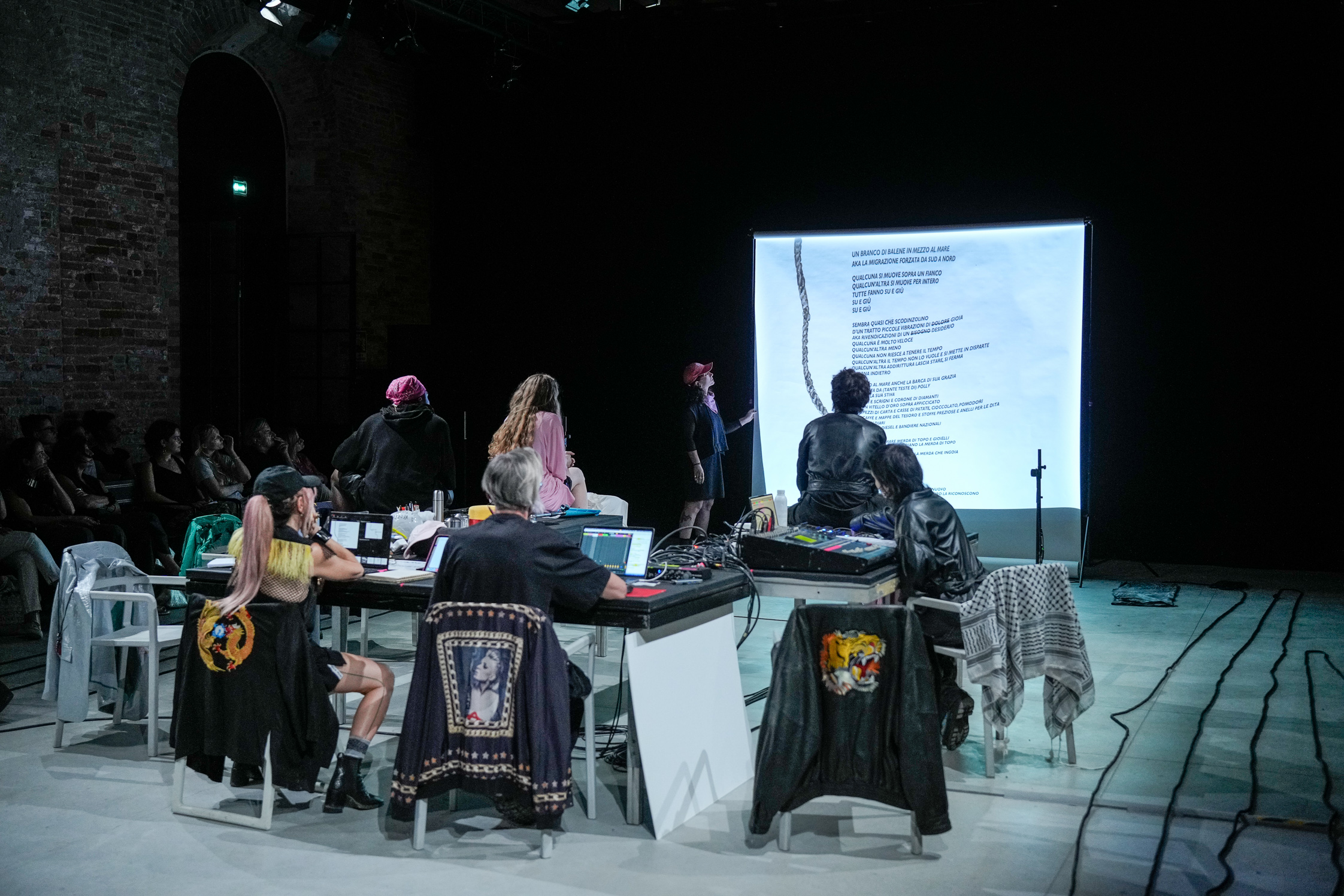
Courtesy La Biennale di Venezia / ph. Andrea Avezzù
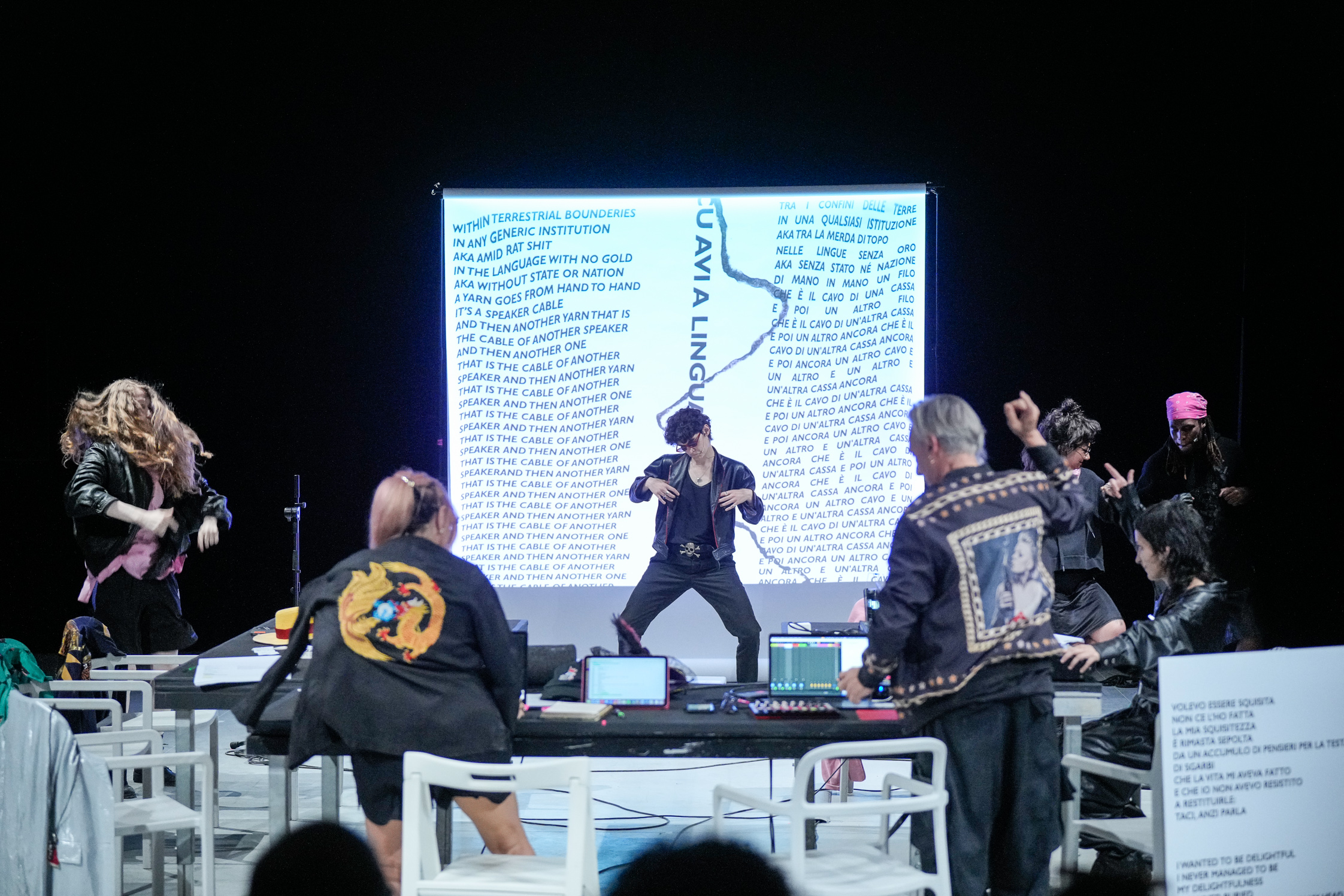
Courtesy La Biennale di Venezia / ph. Andrea Avezzù
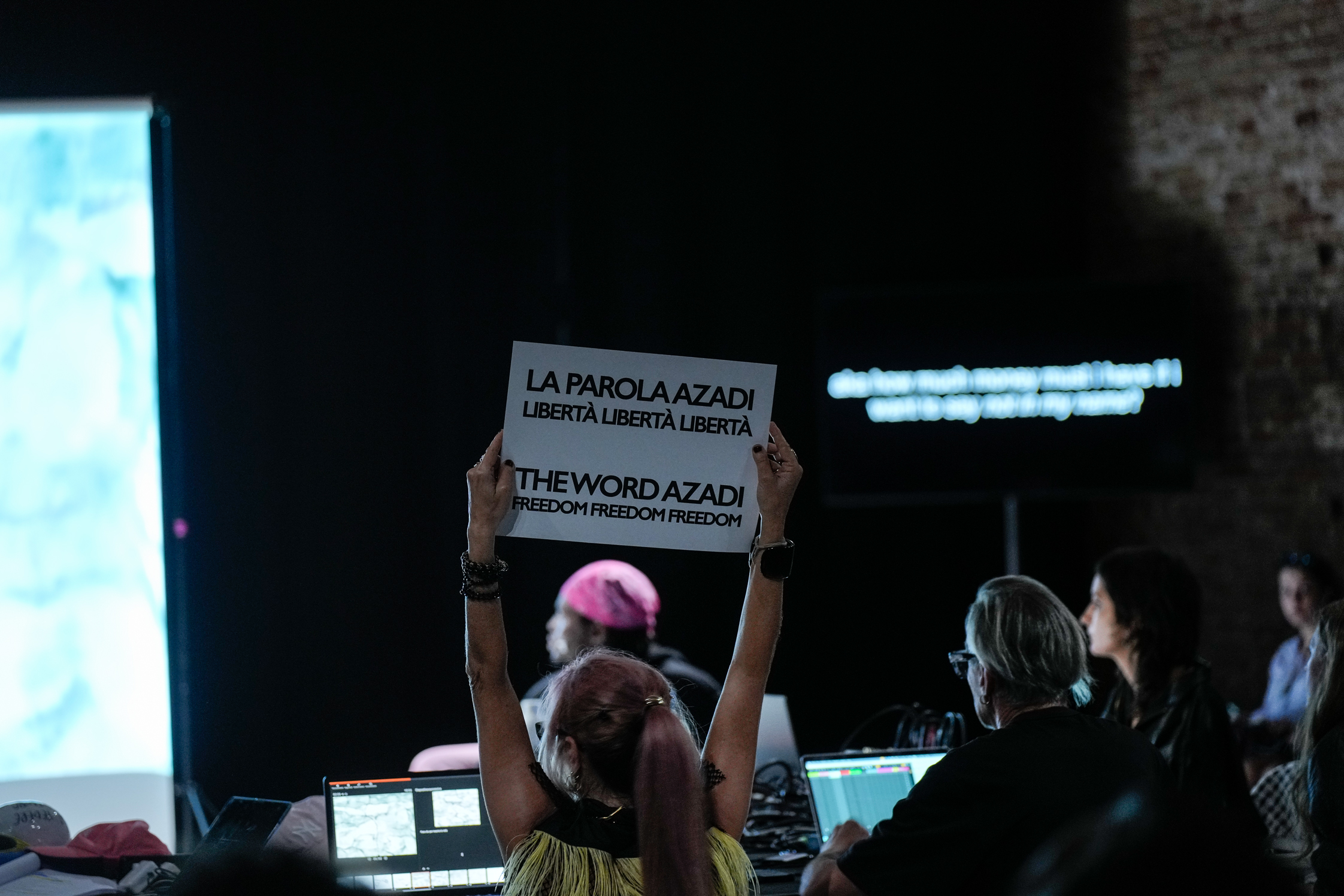
Courtesy La Biennale di Venezia / ph. Andrea Avezzù
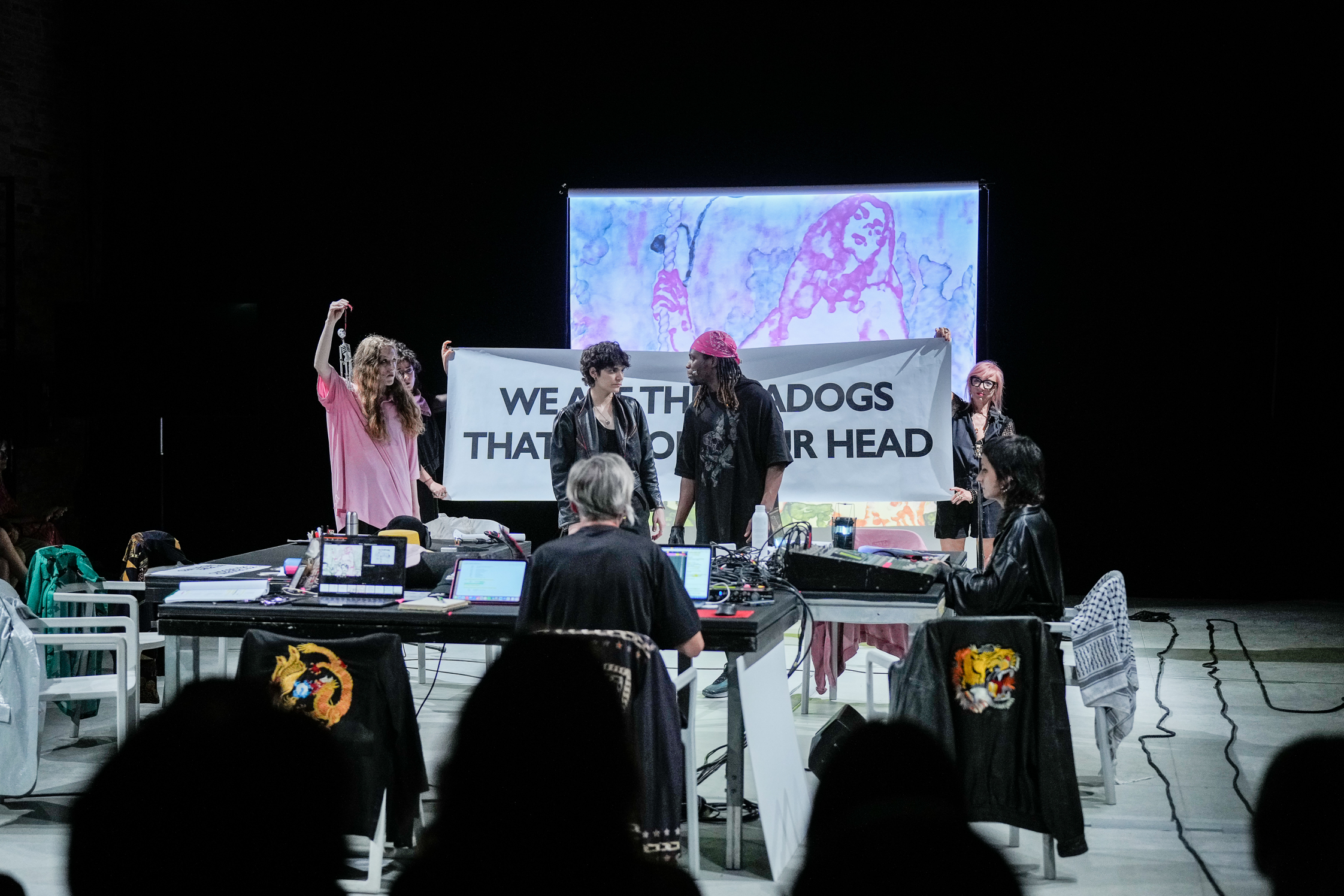
Courtesy La Biennale di Venezia / ph. Andrea Avezzù

