© Cosimo Trimboli
Frankenstein_diptych
(love story + history of hate)
Frankenstein_diptych does not merely revisit a literary myth; it revives it as a political mirror of the present: what happens when we are not heard, and when otherness is perceived as a threat instead of a possibility? This project confronts the dynamics of vulnerability and rejection, bringing to the stage a work that is both critical reflection and poetic immersion.
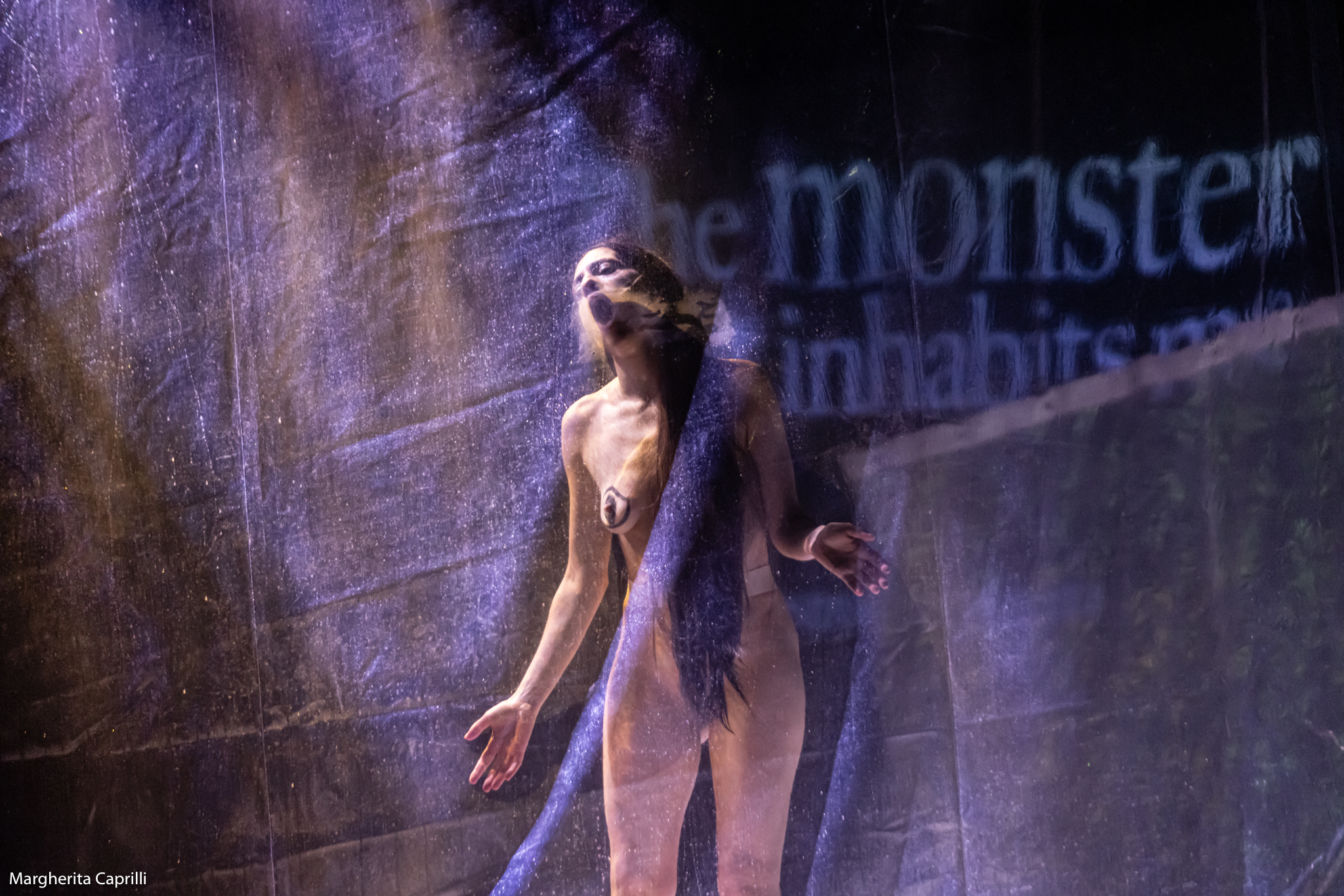
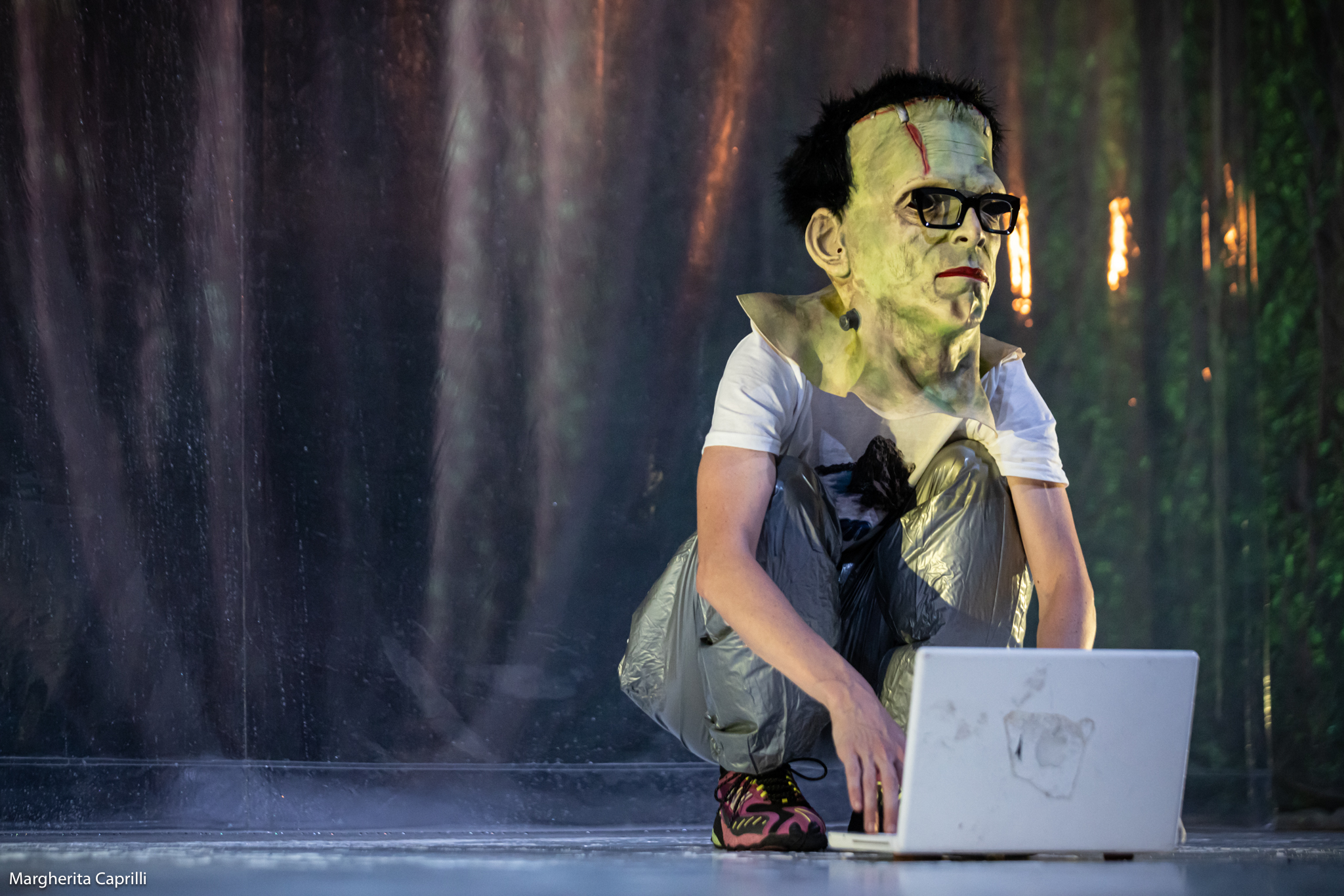
In Frankenstein (a love story) (2023), the first part of the diptych, we enter the abyssal solitude of Mary Shelley and her creations: hybrid, marginal, restless bodies, seeking love and relationships that prove impossible—non-normative affections, recognition never granted. Here, Motus explores the fragile boundary between human and non-human, between care and abandonment, between desire and fear, through the three characters on stage: the creator, the creatress, and the creature—symbiotically one single figure.
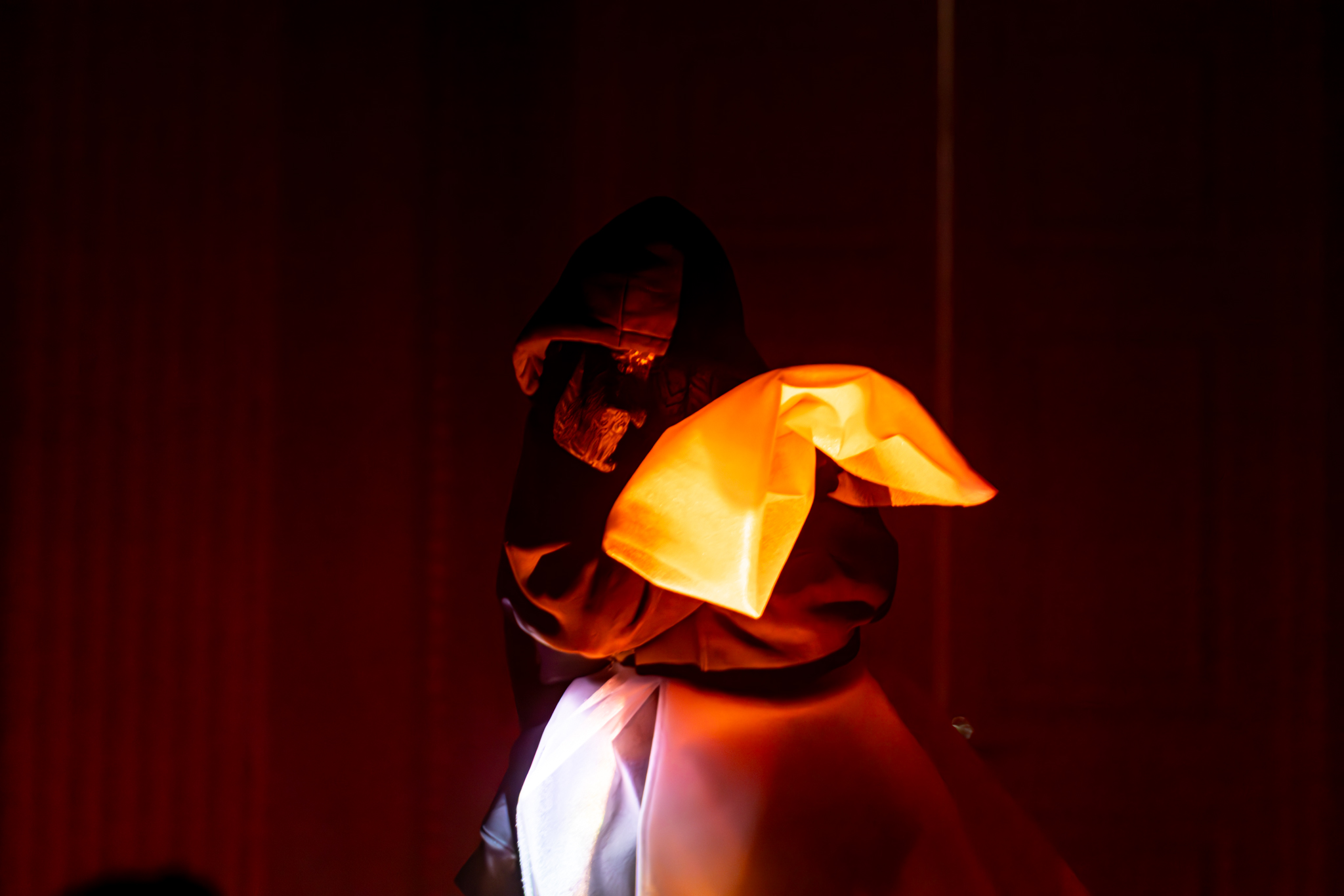
Frankenstein (history of hate) (2025) is the backlash, the consequence of rejection, of society’s inability to manage its relationship with the Other: it is what happens when love—denied and humiliated—breaks, when the encounter fails and becomes rejection and rage. Here, tenderness implodes, benevolence mutates, and the monster appears in the flames, in the void of listening, in the wound of loneliness. It was not born evil: it was made so by suffering and misunderstanding, transformed through the gaze of others.
Frankenstein_diptych (love story + history of hate) is a visceral and political investigation: the monster is not born, but made—by a community incapable of recognizing it. In this dark mirror, the urgency of today is reflected: a world that rejects, discriminates, and produces new forms of marginality, while the creatures of Motus continue to seek, obstinately, a place in the world—because monsters proliferate on borders, between worlds.
Frankenstein (a love story)
The night Mary Shelley dreams Frankenstein with her eyes wide open mirrors the night when the scientist wanders, collecting fragments of corpses—like a primal night, the beginning of the world.
Scenes of creation, monstrous imagination.
Nature is in turmoil. In extreme, frozen, painful landscapes, two figures chase each other, seeking shelter. Rage, love, restlessness, horror—and love again, love, an excess of unreturned love.
“I neither saw nor heard of any being like me”—like the human, the only one of its kind, the creature is also one of a kind.
The radical loneliness of an unheard, untouchable creature, finding no one to speak to, no one able to speak its name.
It is on the borders that monsters proliferate. Between worlds. And here, among the sutured seams of different skins and flesh, this work tries to exist.
Frankenstein (history of hate)
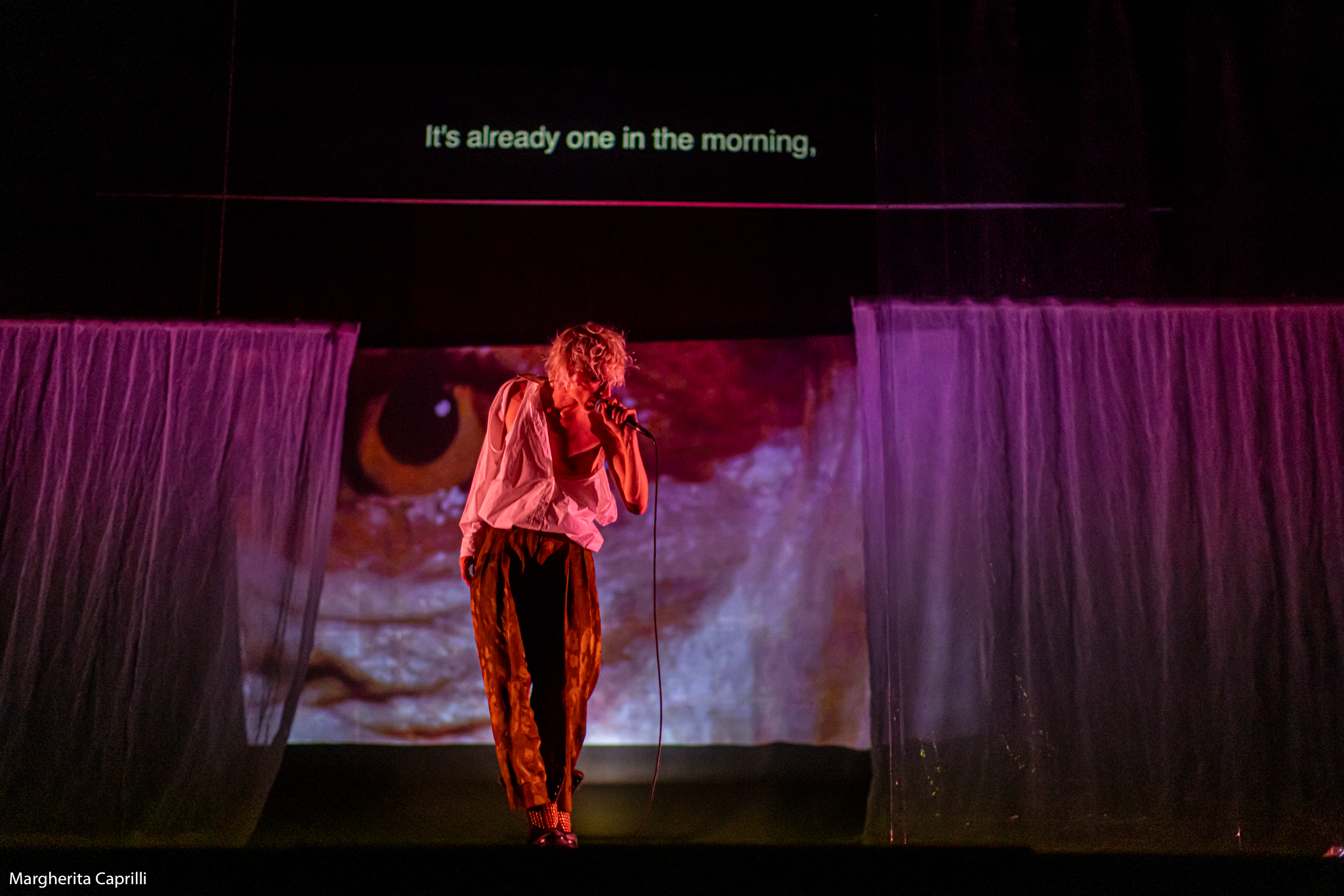
A “performed film” where narrative layers blend kaleidoscopically, and everything is in sharp tension with the present.
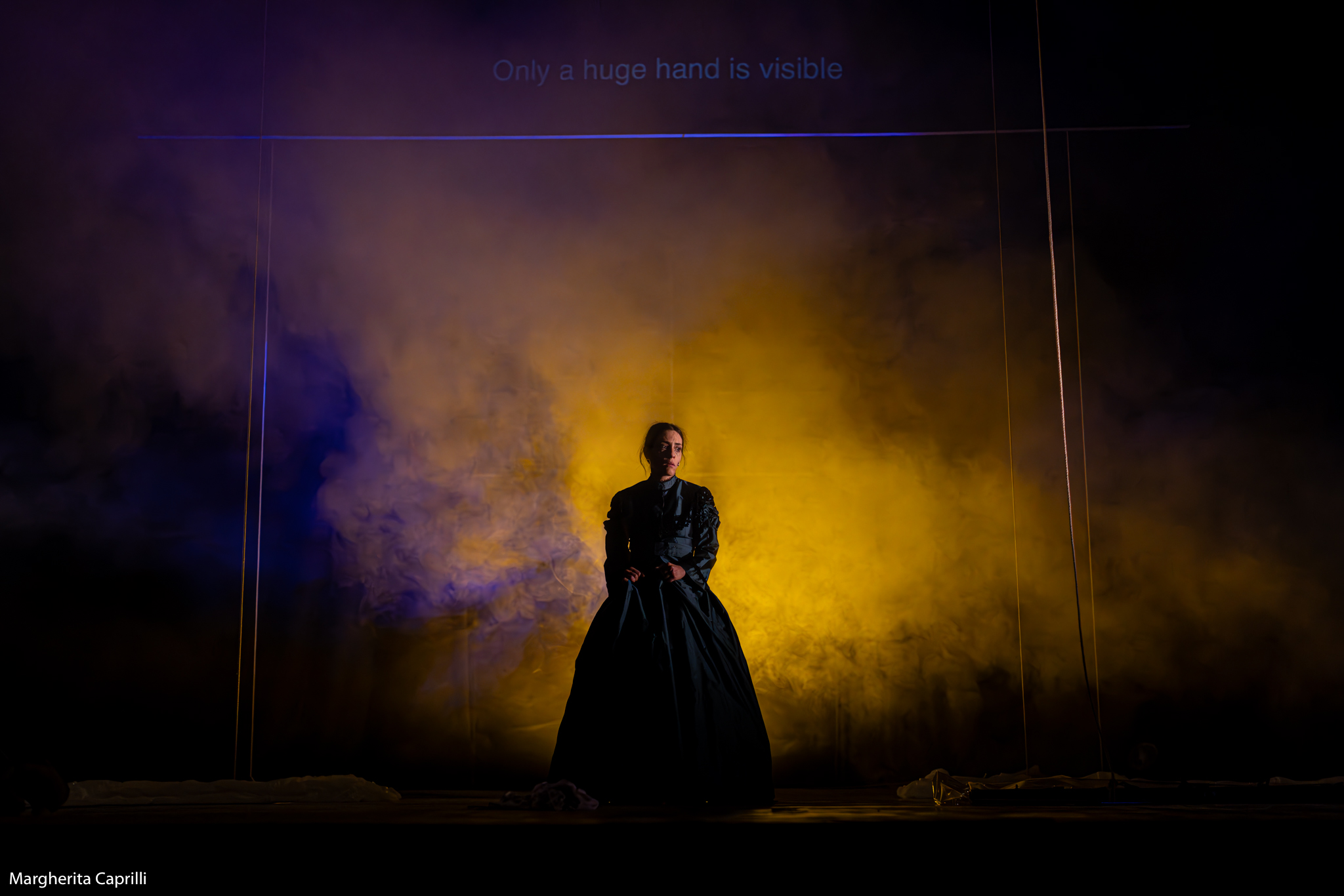
Captain Walton and the ghostly figure of his sister Margaret/Mary—Walton/Wollstonecraft—Seville/Shelley—do not inhabit polar ice fields, but a scorched, apocalyptic planet in the final days of our failing humanity, among wildfires, echoes of genocidal wars, and killer drones.
An extreme, dramatic, and mad film set among the “eco-monsters” of Calabria and sun-bleached beaches.
Another protagonist of this work is the sea: shining at dawn, darkening at dusk, swallowing and spitting out the exhausted bodies of the creature and Dr. Frankenstein in their desperate chase.
A composition that further amplifies the nested box structure Mary W. Shelley used to tell her story of hate—and radical tenderness—of a creature that “will continue to exist because it has never lived.”
“Motus’s insight is that no distinctive mark is needed to feel like an outsider.
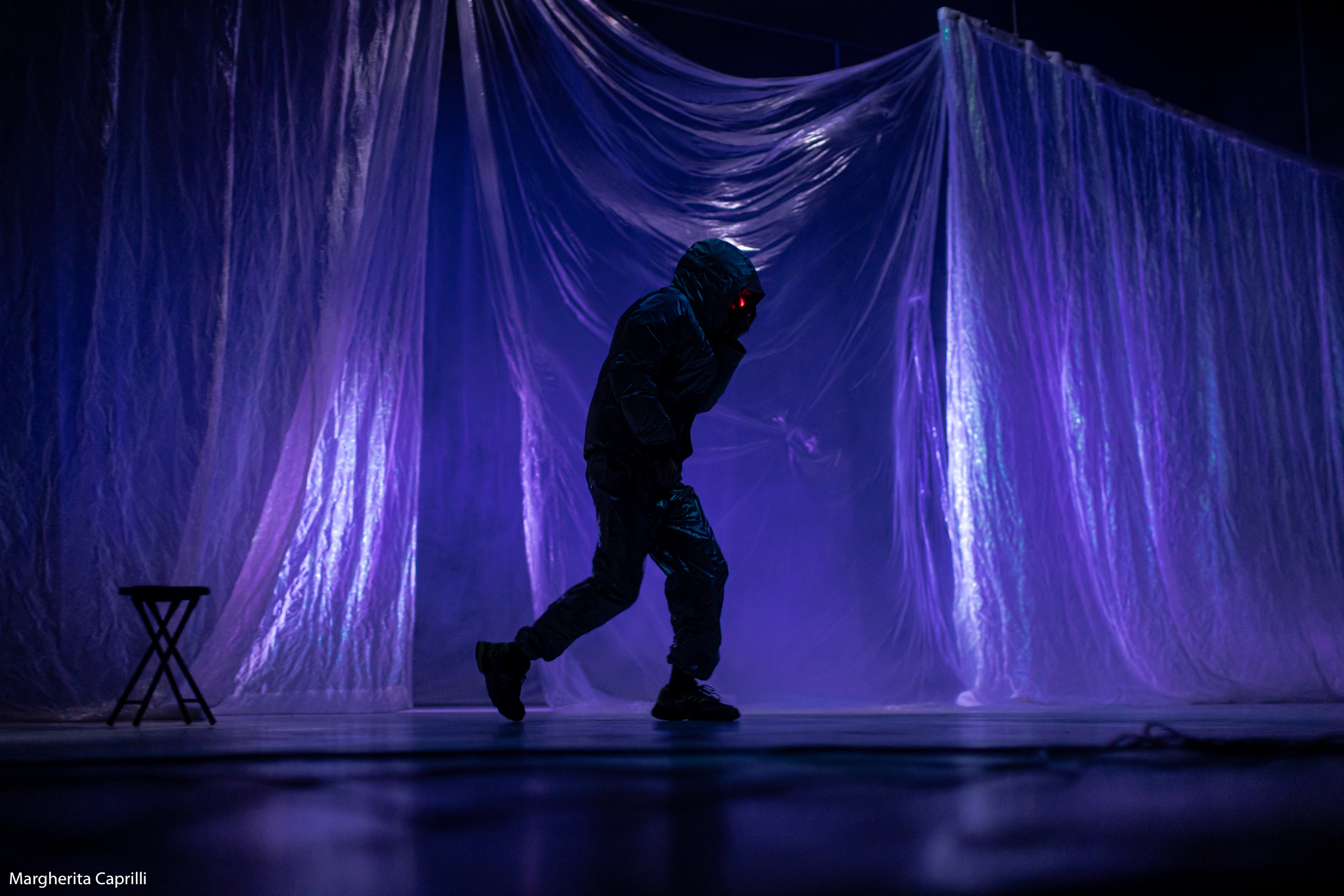
The creature appears hooded, in heavy boots, a motorcycle helmet.
It’s a mask, a symbol, an animal, an ‘anonymous’ being because it belongs to all—like V from V for Vendetta.
But in the world of Frankenstein—which is also our own—no revolution seems possible.
Perhaps that’s why the monster has learned self-irony, and never misses a chance to dance.
Pain and joy are the emotions most often forbidden expression, but now all dams have broken, and the creature gives voice to both.
And though reproduction is denied to it, recognition within this lineage is still possible—but only behind a black flag waving along the Calabrian coast.We are in Soverato, in the province of Catanzaro, where the filmic part of history of hate was shot.
Victor the creator doesn’t die at the North Pole but on a beach—evoking both ancient and recent tragedies for which the Mediterranean remains a witness.Tomiwa Samson Segun Aina, one of the actors Motus has chosen to highlight, holds the flag high and invokes the creature.
His presence tells us that despite hate and violence, passions are born, people move, aesthetics evolve.
You can’t stop the wind—but that’s not enough.
You must have the courage to keep moving.”
— Text by Lucrezia Ercolani, commissioned by and written for Romaeuropa Festival 2025